
jinyilijinyili
- Home
- About
Step into Jinyili
- Product
Product
- Cases
- News
-
+86 135 4946 4701
-
Hot Searches:Sponge Manufacturer | Sponge Products | Polyurethane Sponge | Packaging Sponge | High-Density Resilient Sponge
- Product

1. Is It True That the Higher the "Density" Parameter of High-Density Sponges, the Better?
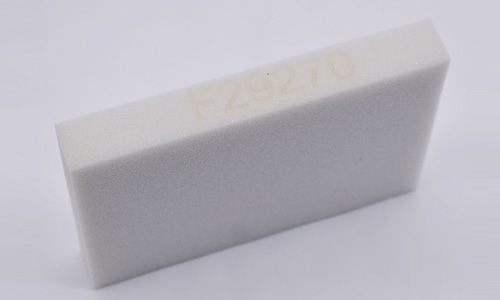
Many people fall into the misconception that "the higher the density, the better" when purchasing industrial sponges. In fact, density is only one of the reference indicators, and it needs to be evaluated in combination with the rebound rate and hardness. For example, for sponges used in precision instrument packaging, excessively high density will make the sponge too hard to fully absorb the vibration and impact force during transportation, thus failing to provide protection instead. By contrast, sponges used for heavy equipment buffering require sufficiently high density to support the weight and avoid permanent collapse after long-term compression. Different scenarios need to be matched with corresponding density ranges. Blindly pursuing high density will not only cause cost waste, but also fail to achieve the expected use effect.
2. Will Sponges Harden and Fail in Low-Temperature Environments?
Ordinary PU sponges will see reduced molecular activity in environments below 0°C, leading to noticeably hardened tactile sensation and degraded buffering performance. They may even become brittle and crack if kept in an environment of -20°C for a long time. If sponges are to be used in cold chain transportation or outdoor low-temperature equipment, products with modified low-temperature-resistant formulas must be selected in advance. This type of sponge is added with special cold-resistant additives, which can maintain stable elasticity and retain its buffering capacity even in an environment of -40°C.
3. Can Fire-Retardant Sponges Completely Prevent Combustion?
Most fire-retardant sponges on the market are products that meet the B1 grade flame-retardant standard. Their function is to self-extinguish quickly after encountering fire, prevent the flame from spreading rapidly, and reduce the release of toxic smoke, rather than being completely non-flammable. Many people mistakenly believe that fire-retardant sponges are absolutely safe and place them directly next to high-temperature heat sources, which is extremely dangerous. Even for flame-retardant sponges, prolonged exposure to temperatures above 200°C will lead to carbonization and ignition. They should still be kept away from open flames and high-temperature areas during use.
4. Will Scales Shed from Sponge Packaging Contaminate Electronic Products?
Ordinary sponges without edge-sealing treatment will shed a small amount of fine fibers after cutting. If they are directly used for packaging high-precision electronic products such as lenses and circuit boards, the shed debris can easily enter the gaps of components, causing problems such as poor contact and image defects. For such scenarios, sponges with surface hot-press edge-sealing or lamination treatment must be selected to completely eliminate the problem of fiber shedding, so as to meet the packaging requirements of precision products.



-
About
Company Profile Corporate Culture Corporate Image Qualification Certificates Partners Video Center -
Product
-
Cases
Toddler Seats Auto Interiors Electronics Packaging Building Sound Insulation Premium Packaging Rehab Products Home Furniture AC Special Use Sports Goods More>> -
News
Company News Industry Insights FAQs -
Contact
Contact